By 2026, millions across the UK will be searching for ways to manage hair loss, but new advancements are offering hope and practical answers. If you are looking to cover up hair loss, this expert guide is here to empower you with the latest strategies and proven solutions. Inside, you will discover up-to-date causes and trends, temporary and permanent methods, innovative products, styling tricks, and a look into the future of hair restoration. Take action now to regain your confidence and enjoy a fuller, healthier-looking head of hair.
Understanding Hair Loss in 2026: Causes and Trends
Hair loss is increasingly affecting millions across the UK, with new research highlighting a significant rise in both men and women seeking to cover up hair loss. Understanding the causes and the latest trends is essential for choosing the right solution. This section explores the current landscape, emerging patterns, and the emotional impact of hair loss in 2026.

The Prevalence of Hair Loss: 2026 Data
In 2026, over 8 million men and 6 million women in the UK are living with hair loss. This sharp increase is linked to higher stress levels, changing diets, and exposure to environmental pollutants. Many are searching for the best ways to cover up hair loss and regain their confidence.
Age and genetics remain the most common contributors, but hormonal imbalances and medical conditions like alopecia areata and thyroid disorders are increasingly recognised. The aftermath of the pandemic has also influenced hair health, with lifestyle changes and increased anxiety playing a role in hair thinning.
Recent studies reveal that people are experiencing hair loss at younger ages, prompting more individuals to seek discreet and effective ways to cover up hair loss. These factors make it important to explore both the causes and the best solutions for concealment.
| Group | Estimated Cases (2026) |
|---|---|
| Men | 8 million |
| Women | 6 million |
Emerging Trends in Hair Loss
The trend of younger adults facing thinning hair is on the rise, with many under 30 now looking for ways to cover up hair loss. Social media platforms have increased awareness and fostered acceptance, making it easier to discuss hair concerns openly.
Technological advances are transforming diagnosis, with AI-powered scalp analysis and teledermatology offering fast, accurate assessments. The demand for non-surgical and instant solutions is growing, as people want to cover up hair loss quickly and confidently. There is also a notable shift towards holistic and preventative strategies, focusing on scalp health, nutrition, and stress management.
For more on these technological and scientific innovations shaping the future, see Hair Loss in 2026: AI and Regenerative Science, which details the role of AI and regenerative medicine in hair care.
Psychological and Social Impact
The desire to cover up hair loss is not just about appearance; it deeply affects self-esteem and daily life. Many individuals report feeling less confident at work or in social situations, which can lead to isolation or anxiety.
However, conversations around mental health and hair loss are becoming more common. Support communities, both online and offline, provide a safe space for sharing experiences and tips to cover up hair loss. These groups help reduce stigma and promote positive body image, encouraging people to embrace change or seek solutions that suit their needs.
Real-life testimonials highlight the emotional journey, showing that with the right support and strategies to cover up hair loss, individuals can regain confidence and live life to the fullest.
Expert-Recommended Temporary Concealment Solutions
Facing hair thinning or patchy scalp can be daunting, but a wealth of modern solutions makes it easier than ever to cover up hair loss discreetly. Temporary concealment methods are designed for all stages and types, providing instant confidence without commitment. Let’s explore the expert-approved options shaping daily routines in 2026.
Instant Hair Concealers: Sprays, Fibres, and Powders
Instant hair concealers remain a top choice for those wanting to cover up hair loss quickly. These products use micro-fibres, coloured sprays, or powders to cling to existing hair, instantly creating the illusion of fuller coverage and camouflaging thinning areas.
Application is straightforward. Users lightly spray or sprinkle the product onto the scalp, then pat or style as desired. Brands now offer a wide range of colours for natural blending, and most formulas resist wind, rain, and sweat for all-day wear. Newer options include hypoallergenic and sensitive scalp formulations.
A 2025 survey revealed 68 percent of users prefer instant concealers for daily confidence. However, they are less effective on completely bald patches, as fibres need some hair to bind to. For tips on choosing and using these products, see the Best hair loss concealer tips.
When you cover up hair loss with these instant solutions, you get immediate results with minimal effort, making them ideal for busy lifestyles.
Hairpieces, Toppers, and Wigs
Hairpieces, toppers, and wigs have evolved remarkably, offering realistic ways to cover up hair loss. Today’s options include partial toppers for thinning crowns, full wigs for total coverage, and custom-made pieces that perfectly match your natural hair.
Innovations in lightweight, breathable materials mean greater comfort and less irritation, even during extended wear. Matching colour, texture, and style is now easier with advanced digital colour-matching services. Many find security in new attachment systems, such as silicone strips or discreet clips.
Costs range from budget-friendly synthetic toppers to premium human hair wigs. Maintenance is straightforward but essential for longevity. Countless users have reported restored confidence at work and social events after choosing hairpieces to cover up hair loss.
Whether you want a subtle boost or a full transformation, these solutions adapt to your personal style and comfort requirements.
Styling Techniques and Accessories
Creative styling remains a powerful way to cover up hair loss and boost volume. Professional stylists recommend strategic haircuts, like layering or textured bobs, to disguise thinning and draw attention away from sparse areas. Volumising shampoos, mousses, and root-lifting sprays add body and depth.
Accessories such as hats, scarves, and headbands are both functional and fashionable. They can completely cover up hair loss or simply enhance your look. Celebrity-inspired styles, including side-swept fringes or messy top knots, are trending for their ease and effectiveness.
According to 2025 Google Trends data, searches for “hair loss styling tips” rose by 40 percent, reflecting the growing interest in non-invasive ways to cover up hair loss. Experimenting with different looks helps you find what suits your personality and needs best.
RESTRAND: Instant Hair Thickening Solutions
RESTRAND stands out as the UK’s leading brand for instant hair thickening sprays and fibres, providing an undetectable way to cover up hair loss. With nine blendable shades, their products work for men, women, and even children, ensuring a seamless match with natural hair.
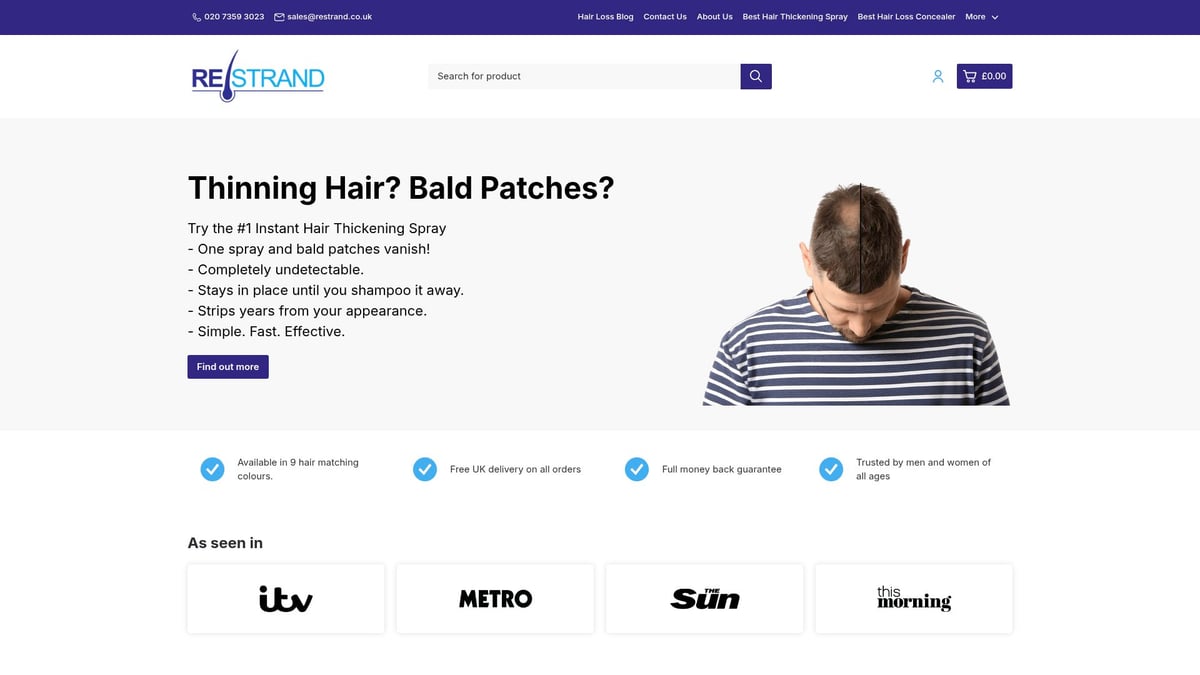
Application is quick and easy—simply spray or sprinkle on, style as usual, and enjoy a fuller appearance in minutes. RESTRAND’s products contain no harsh chemicals and are suitable for all hair types. Thousands of users have regained confidence thanks to the reliable coverage and natural finish.
A money-back guarantee and free UK delivery make RESTRAND a trusted choice for anyone seeking to cover up hair loss without invasive procedures. This commitment to quality and customer care empowers users to feel their best every day.
Longer-Term and Permanent Hair Loss Cover-Up Options
For many, short-term fixes are not enough. When you want to cover up hair loss for the long haul, a range of advanced medical and cosmetic solutions are available. These options offer both lasting results and peace of mind, supporting your journey to restored confidence.
Topical Treatments and Scalp Camouflage
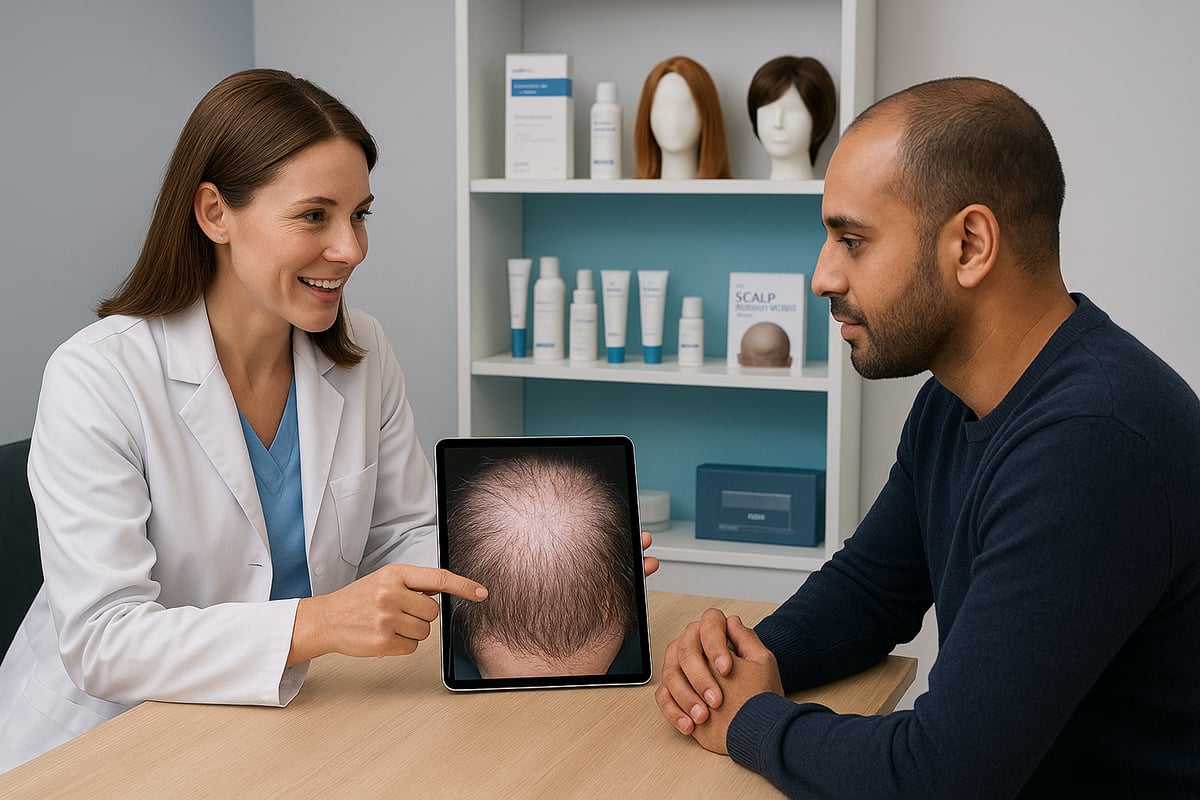
Topical solutions are often the first step when seeking to cover up hair loss with longer-lasting effects. Both prescription and over-the-counter treatments, such as minoxidil, can help slow hair shedding and encourage regrowth. For visible coverage, scalp micropigmentation offers a realistic, tattooed effect that mimics natural hair follicles.
Semi-permanent scalp concealers are also gaining popularity, providing a water-resistant, natural look for weeks at a time. These options suit various degrees and types of hair loss.
| Option | Duration | Key Benefit | Who It's For |
|---|---|---|---|
| Minoxidil | Ongoing | Stimulates regrowth | Early to moderate loss |
| Scalp Micropigmentation | Years | Realistic, low maintenance | All stages, incl. advanced |
| Semi-Permanent Concealers | Weeks | Natural, water-resistant | Patchy or thinning areas |
For those in the early stages, Best options for an emerging bald patch offers practical advice on combining these treatments for optimal results.
Hair Transplantation and Medical Procedures
When topical methods are not enough, surgical options may provide a more permanent way to cover up hair loss. The two main techniques are Follicular Unit Extraction (FUE) and Follicular Unit Transplantation (FUT). These procedures relocate healthy hair follicles to thinning or bald areas, resulting in natural-looking coverage.
Recent innovations include robotic-assisted transplants and experimental stem cell therapies, which promise improved precision and faster recovery. Candidates must have sufficient donor hair and realistic expectations.
Pros of transplantation:
- Permanent solution for many types of hair loss
- Increasingly natural results
- High satisfaction rates
Cons to consider:
- Recovery time and possible side effects
- Cost, averaging £4,000 to £12,000 in the UK
- Not suitable for everyone
Integration of Medical and Cosmetic Approaches
Combining medical treatments with cosmetic solutions can help you cover up hair loss more effectively than relying on a single method. For example, using topical treatments alongside scalp micropigmentation or hair fibres can create the illusion of fuller, thicker hair.
Dermatologists and trichologists often recommend a personalised plan, taking into account the stage and cause of your hair loss. A 2026 clinical review found that people who integrated multiple solutions reported higher confidence and satisfaction.
Case studies highlight how blending approaches leads to both aesthetic and emotional benefits. This holistic strategy ensures you address both the physical and psychological aspects of hair loss.
Financial and Emotional Considerations
Choosing how to cover up hair loss is not just a medical decision, but a personal and financial one. Navigating the NHS and private sector can be complex. Some treatments may be partially covered, but most cosmetic solutions are self-funded.
Key points to consider:
- Insurance and financing options for surgical procedures
- Ongoing maintenance costs for topical and cosmetic solutions
- Access to support groups and counselling resources
Managing expectations is essential. Many find reassurance in connecting with others, whether through online forums or in-person groups. Emotional support is as vital as the treatment itself, helping you stay positive throughout your hair restoration journey.
Choosing the Right Solution: Step-by-Step Guide
Choosing how to cover up hair loss can feel daunting. With so many options available, a structured approach ensures you make informed, confident decisions. This step-by-step guide will help you navigate every stage, from self-assessment to ongoing support.

Step 1: Assess Your Hair Loss Type and Severity
Begin by evaluating your individual situation. Identify where and how much hair thinning or loss is present. Use online self-assessment tools or consult with a trichologist or dermatologist for a professional opinion.
Understanding the root cause is crucial. Factors such as genetics, hormonal changes, stress, or underlying health conditions can all influence hair loss. A thorough assessment is the foundation for finding the best way to cover up hair loss.
Step 2: Set Your Priorities and Lifestyle Needs
Once you know your hair loss profile, consider your personal priorities. Do you want a quick fix or a long-term change? Is budget a significant concern, or are you looking for a permanent result?
Think about your daily routine. Busy professionals might prefer products that are fast and easy to use. Others may value aesthetics or comfort above all. Clarifying your lifestyle needs will help narrow down the most suitable options to cover up hair loss.
Step 3: Research and Compare Products and Treatments
With your goals in mind, start researching available solutions. Read product reviews, consult clinical studies, and seek out user testimonials to gather honest insights.
Ask providers specific questions about effectiveness, side effects, and safety. Be cautious of products that make bold claims without evidence. Comparing options allows you to make a balanced decision on how to cover up hair loss in a way that fits your expectations.
Step 4: Test and Trial Solutions
Before committing, try temporary options to see what works best for your hair and scalp. Many brands offer free samples or money-back guarantees, so you can experiment with minimal risk.
Always patch test new products to check for allergies or sensitivities. This trial phase helps you discover which solutions provide the most natural and comfortable way to cover up hair loss.
Step 5: Monitor Results and Adjust as Needed
Keep track of your progress using photographs or a journal. This makes it easier to evaluate how well your chosen solution works over time.
If you are not satisfied, be open to switching products or consulting with a professional. Monitoring results ensures you continue to cover up hair loss in the most effective and satisfying way possible.
Step 6: Seek Ongoing Support and Professional Advice
Long-term success often depends on support and expert guidance. Join online communities, talk with friends or family, and stay in touch with hair care professionals.
Regular check-ins help you stay updated on new trends and techniques. Accessing support and advice ensures you are equipped to cover up hair loss with confidence as your needs evolve.
Innovations and the Future of Hair Loss Concealment
The future of how we cover up hair loss is rapidly evolving, driven by science and consumer demand. Emerging technologies and new treatments are transforming the way individuals manage thinning hair, offering more effective, personalised, and discreet options than ever before.
Breakthrough Technologies on the Horizon
Technological advances are reshaping how people cover up hair loss. AI-powered scalp analysis tools can now assess hair density, health, and suitability for different treatments in minutes. This allows for highly customised recommendations, making it easier to find the best way to cover up hair loss for each individual.
Another innovation is the rise of 3D-printed hairpieces and custom scalp prosthetics. These products are tailored to match a person’s scalp shape, hair colour, and texture with remarkable accuracy. Smart concealers with adaptive colour-matching technology are also starting to appear, providing a seamless and undetectable solution for those seeking to cover up hair loss quickly and efficiently.
Advances in Non-Invasive Treatments
The next generation of non-invasive treatments offers new hope to those looking to cover up hair loss without surgery. Gene therapy and regenerative medicine are being explored for their ability to stimulate natural hair growth and improve scalp health. Topical treatments are becoming more sophisticated, with new formulas designed to target the root causes of hair thinning.
For example, research into GT-20029: Androgen Receptor Degradation Enhancer is showing promise as a topical solution to address androgenetic alopecia, potentially offering an effective way to cover up hair loss at its source. Eco-friendly and biodegradable concealers are also gaining traction, meeting the demand for safe and sustainable options.
Trends in Consumer Preferences
Consumer attitudes are shifting as people seek more sustainable and inclusive ways to cover up hair loss. There is a growing demand for cruelty-free, vegan, and gender-neutral products that cater to a broader range of users. At-home professional-grade kits are becoming popular, allowing individuals to cover up hair loss conveniently and confidently in their own space.
Many now prioritise products that are gentle on both the scalp and the environment. This move towards holistic care means that people are not just looking to cover up hair loss, but also to support overall hair and scalp health through their choices.
Expert Predictions for 2026 and Beyond
Experts predict that by 2026, digital health and teledermatology will play an even bigger role in helping people cover up hair loss. Virtual consultations and remote scalp assessments will make expert advice more accessible. A multi-modal approach, combining medical, cosmetic, and lifestyle solutions, will become the standard for those seeking to cover up hair loss with lasting results.
Stigma around hair loss continues to decline, thanks to positive body image movements and increased public awareness. The future is set to bring even more innovative, personalised, and empowering solutions for anyone wishing to cover up hair loss and regain their confidence.
Expert Tips for Maintaining a Fuller-Looking Head of Hair
Maintaining a fuller-looking head of hair requires a holistic approach, blending daily routines, expert styling, and healthy lifestyle choices. If you want to cover up hair loss effectively, focusing on prevention and ongoing care is just as essential as finding the right products or treatments. Here are expert-backed strategies to help you achieve lasting results and confidence.
Daily Care Routines and Prevention
Consistent daily care is the foundation for those seeking to cover up hair loss and promote healthier hair growth. Use gentle shampoos and conditioners formulated for thinning hair, and avoid products with harsh chemicals that can cause further damage.
Regular scalp massages improve blood circulation, supporting the health of hair follicles. Nutrition is equally important. Ensure your diet includes protein, iron, vitamins, and hydration to maintain strong, resilient hair.
Simple habits like avoiding excessive heat styling and not wearing tight hairstyles can also help prevent breakage, making it easier to cover up hair loss as part of your daily routine.
Professional Styling and Salon Services
A skilled stylist can be a game-changer for anyone wanting to cover up hair loss. Choose professionals experienced in working with thinning hair. They can recommend cuts, colouring, and texturising techniques that create the illusion of volume and fullness.
Salon treatments such as keratin smoothing or volumising services can further enhance your hair’s appearance. For tailored advice and inspiration, explore Hairstyles to hide thinning hair for practical ideas on styles that disguise thinning areas.
Keep up with regular trims and salon visits to maintain the best results, ensuring your efforts to cover up hair loss remain effective and natural-looking.
Lifestyle Adjustments and Stress Management
Lifestyle choices have a significant impact on your ability to cover up hair loss and maintain hair health. Practice mindfulness, get regular exercise, and prioritise quality sleep to support overall wellbeing.
Stress is a known trigger for hair thinning cycles, so adopting relaxation techniques can help minimise further loss. Consider supplements if recommended by a healthcare professional, but always focus on holistic, balanced living for the best long-term outcomes.
Building Confidence and Embracing Change
Confidence plays a crucial role in how you cover up hair loss and present yourself to the world. Engage in positive self-talk and surround yourself with supportive friends or online communities.
If you are struggling emotionally, resources like the Psychological impact of hair loss can offer guidance and real-life stories to remind you that you are not alone. Embracing change and celebrating your unique journey will help you thrive, regardless of your hair’s appearance.
Keeping Informed and Adapting
Staying updated on new developments is key if you want to cover up hair loss successfully. Follow trusted sources for the latest hair loss news, research new products, and do not hesitate to try emerging techniques.
Be open to adjusting your approach as your needs change. Flexibility, resilience, and a willingness to learn will ensure you continue to look and feel your best as you cover up hair loss now and in the future.
As we’ve explored, covering up hair loss in 2026 is no longer about compromise—it’s about confidence, choice, and finding the right solution for your unique needs. Whether you’re considering instant concealers, longer-term treatments, or just seeking practical styling advice, you deserve products that deliver real results and support your journey. If you’re ready to take the next step and discover how a fuller, healthier-looking head of hair can boost your self-esteem, Find Out More about the expert-backed options available to you.