



Thinning hair affects millions of people across the UK, impacting confidence and self-esteem in profound ways. Whether you've noticed a gradually widening parting, more hair in your brush, or increased scalp visibility, seeking effective hair thinning help is the first step towards reclaiming your appearance and confidence. Understanding the causes, exploring evidence-based treatments, and discovering instant cosmetic solutions can transform your relationship with your hair. This comprehensive guide explores the most effective strategies available in 2026, combining medical insights with practical solutions that deliver immediate results.
Understanding Hair Thinning Patterns
Hair thinning manifests differently across individuals, with distinct patterns emerging based on genetics, hormones, and environmental factors. Recognising your specific pattern is crucial for selecting the most effective hair thinning help.
Common Thinning Patterns
Male pattern baldness typically begins with a receding hairline and thinning at the crown, whilst female pattern hair loss often presents as overall thinning with a widening central parting. Both conditions share a genetic component, though their progression differs significantly.
- Androgenetic alopecia: The most common form affecting both men and women
- Diffuse thinning: Generalised reduction in hair density across the scalp
- Temporal recession: Hair loss concentrated at the temples
- Crown thinning: Specific loss at the vertex of the scalp
Identifying your pattern helps healthcare professionals recommend targeted treatments. Early intervention significantly improves outcomes, making prompt action essential when you first notice changes.
Medical Treatments and Professional Interventions
Professional medical treatments offer clinically proven hair thinning help, with several options demonstrating significant efficacy in clinical trials. Early intervention prevents further hair loss and may stimulate regrowth.
Prescription Medications
Minoxidil and finasteride remain the gold standard treatments approved by regulatory authorities. Minoxidil, available without prescription in the UK, works by extending the growth phase of hair follicles. Finasteride, requiring a prescription, blocks the hormone responsible for follicle miniaturisation in men.
| Treatment | Application | Typical Results | Considerations |
|---|---|---|---|
| Minoxidil 5% | Topical, twice daily | Visible improvement in 3-6 months | Requires ongoing use |
| Finasteride 1mg | Oral, daily | Stabilisation within 6 months | Prescription only (men) |
| PRP Therapy | Injections, quarterly | Gradual density improvement | Multiple sessions needed |
| Low-Level Laser | At-home device, regular use | Subtle thickening over time | Significant time commitment |
Recent advances in 2026 have introduced combination therapies that leverage multiple mechanisms simultaneously. These protocols often produce superior results compared to single-treatment approaches.


When to Seek Professional Help
Consulting a dermatologist or trichologist becomes essential when thinning accelerates, occurs in unusual patterns, or accompanies other symptoms. Professional guidance on treatment options ensures you select evidence-based interventions appropriate for your specific condition.
Sudden hair loss, patchy bald spots, or hair breakage near the roots warrant immediate professional assessment. These patterns may indicate underlying health conditions requiring medical attention beyond cosmetic concerns.
Nutritional Foundations for Healthy Hair
Proper nutrition provides essential building blocks for hair growth, making dietary optimisation a fundamental aspect of hair thinning help. Deficiencies in specific nutrients directly impact hair health and growth cycles.
Essential Nutrients for Hair Health
Protein forms the structural foundation of hair, whilst specific micronutrients regulate growth processes and maintain follicle health. Iron deficiency, particularly common in menstruating women, frequently contributes to increased shedding and reduced growth.
Critical nutrients include:
- Biotin: Supports keratin production and follicle strength
- Iron: Enables oxygen transport to follicles
- Zinc: Regulates tissue growth and repair
- Vitamin D: Influences follicle cycling
- Omega-3 fatty acids: Reduce inflammation affecting follicles
- Protein: Provides amino acids for hair structure
Comprehensive hair loss prevention strategies emphasise whole-food nutrition over isolated supplements. A balanced diet rich in lean proteins, leafy greens, fatty fish, and nuts typically provides adequate nutrients for optimal hair health.
Blood tests can identify specific deficiencies requiring targeted supplementation. Working with a healthcare provider ensures you address genuine deficiencies rather than taking unnecessary supplements.
Lifestyle Modifications That Make a Difference
Beyond nutrition, several lifestyle factors significantly influence hair health and thinning progression. Strategic modifications provide meaningful hair thinning help without medical intervention.
Stress Management and Sleep Quality
Chronic stress triggers telogen effluvium, a condition where follicles prematurely enter the resting phase, leading to increased shedding months later. Managing stress through mindfulness, exercise, and adequate sleep supports healthy hair cycles.
Sleep deprivation disrupts hormone balance and cellular repair processes essential for hair growth. Prioritising seven to nine hours of quality sleep nightly creates optimal conditions for follicle health.
- Establish consistent sleep schedules to regulate hormonal patterns
- Incorporate stress-reduction techniques such as meditation or yoga
- Maintain regular physical activity to improve circulation
- Limit alcohol and tobacco which impair nutrient delivery
- Stay hydrated to support cellular functions
Hair Care Practices That Protect Thinning Hair
Gentle hair care becomes increasingly important as hair thins. Preventing damage through proper care techniques preserves existing hair and prevents unnecessary breakage.

Avoid excessive heat styling, tight hairstyles causing traction, and harsh chemical treatments. Caring for thinning hair requires adapting your routine to accommodate increased fragility.
Instant Cosmetic Solutions for Immediate Results
Whilst medical treatments and lifestyle changes produce gradual improvements, cosmetic concealers provide immediate hair thinning help. These solutions address the psychological impact of visible thinning whilst other treatments take effect.
Hair Thickening Sprays and Fibres
Modern hair thickening products have evolved significantly, offering natural-looking results that withstand daily activities. These products work by adhering to existing hair strands, creating the appearance of increased density and volume.
Hair thickening sprays represent a particularly effective option, combining ease of application with immediate, natural results. The best formulations resist moisture, wind, and contact whilst remaining completely undetectable.
| Product Type | Application Time | Duration | Best For |
|---|---|---|---|
| Keratin fibres | 2-3 minutes | Until washing | Localised thinning |
| Thickening sprays | 30-60 seconds | 24+ hours | Overall volume |
| Scalp concealers | 1-2 minutes | Until washing | Visible scalp |
| Volume powders | 1 minute | 12-24 hours | Root lift |
These cosmetic solutions integrate seamlessly into daily routines, requiring minimal time whilst delivering maximum confidence. Many users combine them with medical treatments, enjoying immediate results whilst building long-term improvement.
Choosing the Right Concealer
Selecting appropriate products depends on your thinning pattern, hair colour, and lifestyle requirements. The best hair loss concealers offer shade matching, water resistance, and natural movement.
Consider products specifically formulated for your hair type and colour. Premium options provide multiple shade choices, ensuring perfect matches that remain invisible even under close inspection. Testing products in natural lighting helps assess their effectiveness before committing to regular use.
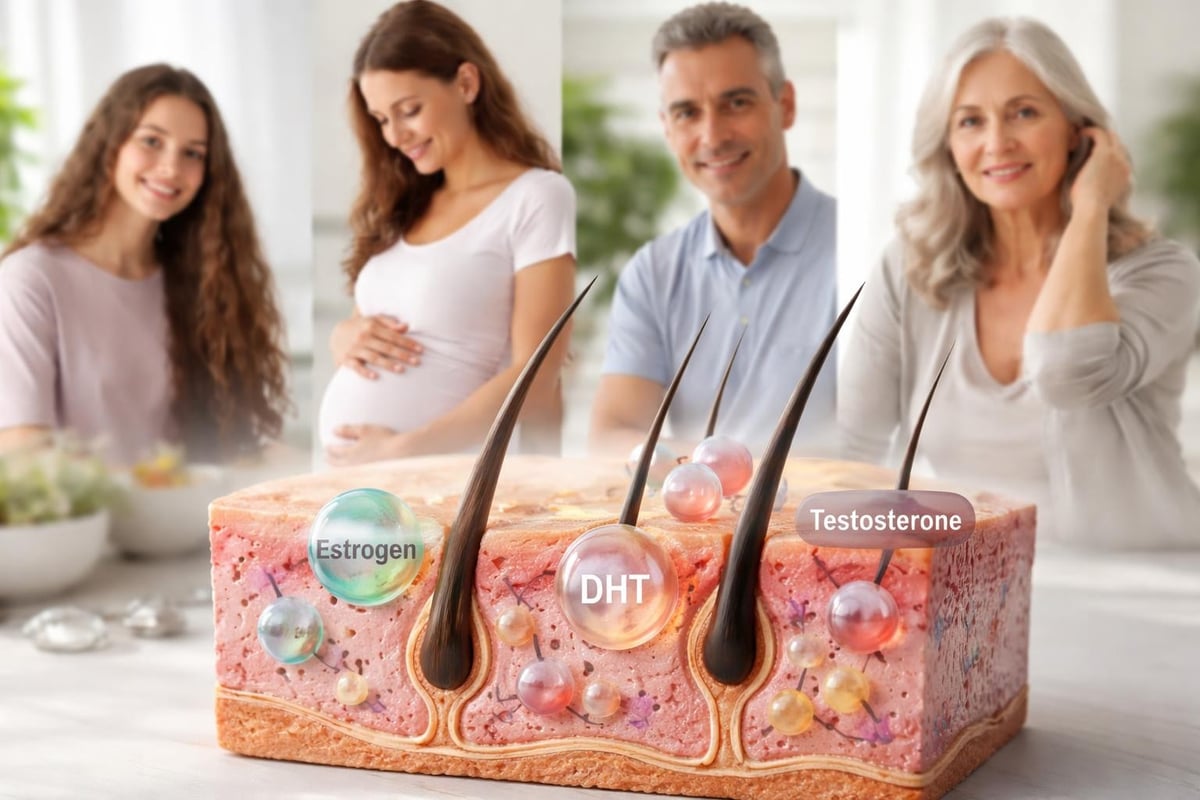
Hormonal Factors and Age-Related Thinning
Hormonal fluctuations throughout life significantly impact hair density and growth. Understanding these changes helps contextualise your experience and identify appropriate hair thinning help.
Menopause and Hair Changes
Women experiencing perimenopause and menopause often notice increased thinning due to declining oestrogen levels. This hormonal shift allows androgenic effects to become more prominent, affecting follicle behaviour.
Hormone replacement therapy may help some women, though individual responses vary. Discussing hormonal hair thinning with healthcare providers familiar with ageing hair concerns ensures comprehensive treatment planning.
Male Pattern Baldness Progression
In men, dihydrotestosterone (DHT) sensitivity determines the extent of androgenetic alopecia. Genetic predisposition combined with age-related hormonal changes drives progressive thinning, typically beginning in the twenties or thirties.
- Early intervention offers the best outcomes
- Combination approaches address multiple factors
- Consistency determines treatment success
- Realistic expectations prevent disappointment
Understanding the progressive nature of genetic hair loss helps set appropriate goals. Stabilising thinning represents success, with any regrowth considered a bonus outcome.
Strategic Styling for Thinning Hair
Smart hairstyle choices dramatically improve the appearance of thinning hair. Hairstyles that conceal thinning work with your hair's natural characteristics rather than against them.
Optimal Cuts and Styles
Shorter styles generally work better for thinning hair, creating the illusion of density through strategic layering and texture. Avoiding harsh lines and heavy products prevents limp, flat appearances that emphasise thinning.
Effective styling strategies:
- Request textured cuts that add movement and dimension
- Avoid severe partings that expose the scalp
- Consider shorter lengths for improved volume
- Use lightweight styling products to maintain lift
- Embrace natural texture rather than fighting it
Professional stylists experienced with thinning hair understand techniques that maximise existing hair. Regular trims remove damaged ends whilst maintaining shape that enhances thickness perception.
Colour Considerations
Strategic colouring can minimise the contrast between hair and scalp, making thinning less noticeable. Lighter shades often work better than dark colours, which create stark contrast against pale scalps.
Highlights and lowlights add dimension that creates depth perception, making hair appear thicker. Avoiding over-processing prevents damage that exacerbates thinning problems.
Building a Comprehensive Treatment Plan
Effective hair thinning help combines multiple approaches tailored to your specific situation. Creating a personalised plan addresses immediate concerns whilst building long-term improvement.
Combining Approaches for Maximum Effect
Layering treatments that work through different mechanisms produces synergistic results. Medical treatments address underlying causes, lifestyle modifications optimise growth conditions, and cosmetic solutions provide immediate confidence.
| Timeframe | Medical | Lifestyle | Cosmetic |
|---|---|---|---|
| Immediate | Consultation | Stress assessment | Thickening spray |
| 1-3 months | Begin treatments | Diet optimisation | Refine techniques |
| 3-6 months | Monitor progress | Exercise routine | Ongoing use |
| 6-12 months | Adjust protocols | Habit maintenance | Continued confidence |
Tracking progress through photographs and regular assessments helps maintain motivation during the months required for medical treatments to show results. Celebrating small improvements reinforces commitment to your comprehensive plan.
Setting Realistic Expectations
Understanding typical timelines and outcomes prevents disappointment whilst maintaining motivation. Medical treatments typically require three to six months before visible improvements appear, with maximum results emerging after twelve months of consistent use.
Stabilising hair loss represents a significant achievement, as progressive thinning would otherwise continue unchecked. Any regrowth or increased density exceeds baseline expectations.
The Psychological Impact of Hair Thinning
Hair loss affects mental health and self-perception profoundly, making psychological support an important component of comprehensive hair thinning help. Addressing emotional aspects alongside physical treatments promotes overall wellbeing.
Building Confidence During Treatment
Immediate cosmetic solutions provide crucial psychological benefits whilst awaiting medical treatment results. Volumising products restore confidence, enabling you to engage fully in social and professional situations without self-consciousness.
Many people report that cosmetic concealers transform their daily experience, eliminating constant worry about appearance. This psychological relief often motivates continued commitment to long-term treatment protocols.
Support groups and counselling help process emotions surrounding hair loss. Connecting with others experiencing similar challenges reduces isolation and provides practical coping strategies.
Emerging Research and Future Treatments
Scientific advances continue expanding hair thinning help options, with several promising treatments approaching clinical availability in 2026. Staying informed about developments helps you make timely decisions about incorporating new options.
Cutting-Edge Approaches
Research into stem cell therapies, modified proteins, and targeted drug delivery systems shows encouraging results. Studies exploring modified proteins demonstrate potential for entirely new treatment categories.
Gene therapy approaches aim to address the underlying genetic factors driving androgenetic alopecia. Whilst still experimental, these technologies may revolutionise hair loss treatment within the next decade.
Promising research areas include:
- 3D-printed hair follicles for transplantation
- Topical JAK inhibitors showing rapid regrowth
- Microbiome-based treatments addressing scalp health
- Advanced delivery systems improving medication effectiveness
Participating in clinical trials provides early access to innovative treatments whilst contributing to scientific knowledge. Discussing trial opportunities with healthcare providers helps identify appropriate studies matching your situation.
Addressing hair thinning requires a multifaceted approach combining medical treatments, lifestyle optimisation, and practical cosmetic solutions that work together to restore your confidence and appearance. Whilst medical interventions and healthy habits build long-term improvement, immediate results matter for your daily wellbeing and self-esteem. RESTRAND LTD offers instant hair thickening solutions that deliver natural-looking results within seconds, helping you look and feel your best whilst pursuing comprehensive hair thinning help. Discover how our premium products can transform your confidence today.