



Hair loss affects millions of people across the United Kingdom, causing significant emotional distress and impacting self-confidence. Whether you're experiencing gradual thinning, noticeable bald patches, or more extensive hair loss, finding the best thing for hair loss requires understanding your specific situation, exploring available treatments, and often combining multiple approaches for optimal results. In 2026, individuals have access to more solutions than ever before, ranging from medical interventions to instant cosmetic options that deliver immediate visual improvements.
Understanding the Root Causes of Hair Loss
Before determining the best thing for hair loss for your particular circumstances, identifying the underlying cause proves essential. Hair loss manifests differently depending on whether it stems from genetic factors, medical conditions, lifestyle choices, or external stressors.
Genetic and Hormonal Factors
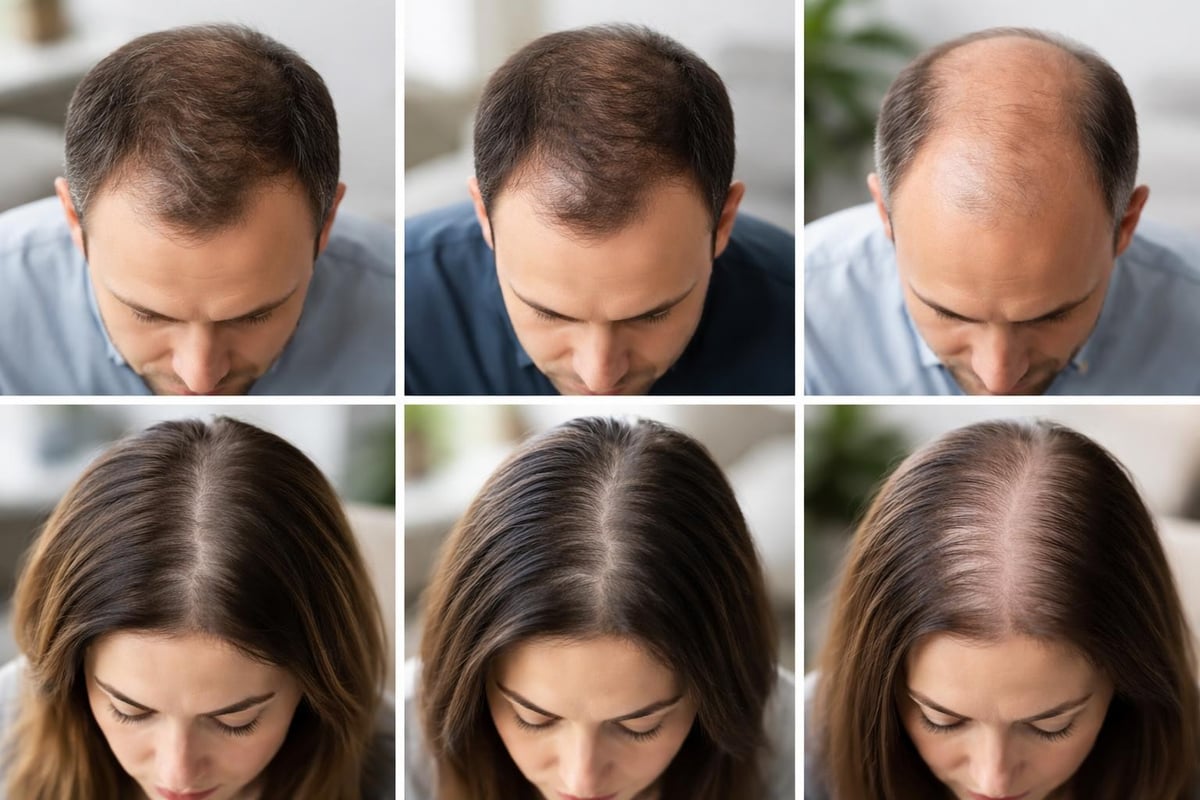
Androgenetic alopecia, commonly known as male or female pattern baldness, represents the most prevalent form of hair loss worldwide. This hereditary condition affects both men and women, though it manifests differently between genders.
Key characteristics include:
- Gradual thinning at the crown and temples in men
- Widening parting and overall thinning in women
- Progressive nature that worsens without intervention
- DHT hormone sensitivity in hair follicles
According to Stanford Health Care’s research on hair loss causes, genetic predisposition combined with hormonal influences creates a challenging scenario that requires targeted treatment approaches.

Medical Conditions and Deficiencies
Numerous health conditions contribute to temporary or permanent hair loss. Thyroid disorders, autoimmune diseases, and nutritional deficiencies frequently trigger unexpected shedding.
| Condition Type | Common Triggers | Reversibility |
|---|---|---|
| Autoimmune | Alopecia areata, lupus | Partial to full |
| Nutritional | Iron, protein, vitamin D deficiency | Usually reversible |
| Hormonal | PCOS, thyroid dysfunction | Treatable with medication |
| Medical Treatment | Chemotherapy, radiation | Typically reversible |
Healthline’s comprehensive guide explores how conditions ranging from anaemia to stress-related telogen effluvium impact hair growth cycles. Understanding whether your hair loss stems from a treatable medical condition helps determine the most appropriate intervention strategy.
Medical Treatments: The Clinical Approach
For individuals seeking the best thing for hair loss through clinical channels, several FDA-approved medications have demonstrated efficacy in controlled studies. These treatments work by addressing the biological mechanisms that cause hair follicles to shrink and eventually cease producing hair.
Minoxidil: The Over-the-Counter Solution
Minoxidil remains the most accessible medical treatment for hair loss, available without prescription in concentrations of 2% and 5%. This topical solution stimulates blood flow to hair follicles and extends the growth phase of the hair cycle.
Application considerations:
- Apply directly to the scalp twice daily
- Expect 3-6 months before visible improvements
- Continue indefinitely to maintain results
- May cause initial shedding before regrowth
- Works best on the crown rather than the hairline
The treatment requires commitment and patience, with results varying significantly between individuals. Discontinuation typically results in the loss of any regrown hair within several months.
Finasteride: Prescription Intervention
Available only through prescription for men, finasteride works by blocking the conversion of testosterone to DHT, the hormone responsible for shrinking hair follicles in androgenetic alopecia. Women of childbearing age should avoid this medication due to potential birth defects.
Clinical studies demonstrate that approximately 90% of men maintain their existing hair whilst taking finasteride, with around 65% experiencing some degree of regrowth. However, potential side effects require careful consideration and medical supervision.
Lifestyle and Nutritional Strategies
The best thing for hair loss sometimes involves addressing fundamental lifestyle factors that compromise hair health. Whilst these approaches may not reverse genetic hair loss, they optimise conditions for hair growth and prevent additional shedding.
Dietary Optimisation for Hair Health
Hair follicles require specific nutrients to function optimally. Deficiencies in key vitamins and minerals can exacerbate existing hair loss or trigger shedding in previously unaffected individuals.
Essential nutrients for hair growth:
- Protein: Building blocks for hair structure
- Iron: Oxygen transport to follicles
- Biotin: Keratin production support
- Vitamin D: Follicle cycling regulation
- Zinc: Cell growth and tissue repair
- Omega-3 fatty acids: Scalp health and inflammation reduction
Research from Medical News Today indicates that addressing nutritional deficiencies can significantly improve hair quality and reduce excessive shedding, particularly in cases of telogen effluvium.
Stress Management and Sleep Quality
Chronic stress elevates cortisol levels, potentially disrupting the hair growth cycle and pushing more follicles into the resting phase. Implementing stress-reduction techniques and prioritising quality sleep supports overall hair health.

Advanced Medical Procedures
When topical treatments and medications prove insufficient, several advanced procedures offer more dramatic results for those seeking the best thing for hair loss through invasive interventions.
Hair Transplantation Technology
Modern hair transplant techniques have evolved significantly from the obvious "plugs" of previous decades. Follicular Unit Extraction (FUE) and Follicular Unit Transplantation (FUT) now deliver natural-looking results with minimal scarring.
| Procedure | Method | Recovery Time | Results Timeline | Cost Range |
|---|---|---|---|---|
| FUE | Individual follicle extraction | 7-10 days | 9-12 months | £3,000-£10,000 |
| FUT | Strip harvesting | 10-14 days | 9-12 months | £2,500-£8,000 |
| Robotic FUE | AI-assisted extraction | 7-10 days | 9-12 months | £5,000-£15,000 |
These procedures represent significant financial and time investments, requiring careful consideration of expectations versus realistic outcomes. Success depends heavily on having sufficient donor hair available for transplantation.
Platelet-Rich Plasma Therapy
PRP therapy involves extracting your own blood, processing it to concentrate platelets, then injecting this solution into the scalp to stimulate dormant follicles. Whilst some practitioners report encouraging results, clinical evidence remains mixed regarding long-term efficacy.
Cosmetic Solutions: Immediate Visual Improvement
For many individuals, the best thing for hair loss involves immediate cosmetic improvement whilst pursuing longer-term treatment options. Hair thickening sprays and concealers provide instant results without medical intervention or side effects.
Instant Coverage Technology
Modern hair thickening products utilise advanced formulations that bond to existing hair strands and the scalp, creating the appearance of fuller, thicker hair within seconds. These solutions offer particular advantages for individuals experiencing diffuse thinning or those awaiting results from medical treatments.
Benefits of cosmetic concealers:
- Immediate visual improvement in hair density
- No side effects or contraindications
- Reversible and adjustable application
- Suitable for all genders and hair types
- Cost-effective compared to medical procedures
The technology behind hair building fibres has advanced considerably, with natural keratin-based products that resist wind, rain, and perspiration whilst remaining undetectable even at close range.
Combining Approaches for Optimal Results
Many individuals discover that the best thing for hair loss involves combining medical treatments with cosmetic solutions. Using minoxidil or finasteride addresses the underlying progression whilst instant concealers provide confidence-boosting coverage during the months required for medical treatments to take effect.

Preventing Further Hair Loss
Regardless of which treatment approach you select, implementing protective strategies helps preserve existing hair and maximise the effectiveness of your chosen intervention.
Gentle Hair Care Practices
Aggressive styling, excessive heat, and harsh chemical treatments accelerate hair loss and damage fragile strands. Adopting gentle care practices protects vulnerable hair during the regrowth process.
Protective measures include:
- Using wide-toothed combs instead of brushes on wet hair
- Limiting heat styling to essential occasions only
- Avoiding tight hairstyles that create tension
- Selecting sulphate-free, gentle cleansing products
- Patting hair dry rather than vigorous rubbing
Scalp Health Optimisation
A healthy scalp environment supports optimal hair growth and maximises the effectiveness of topical treatments. Conditions like seborrheic dermatitis or fungal infections can impair follicle function and exacerbate hair loss.
Regular scalp exfoliation removes build-up that may clog follicles, whilst maintaining appropriate moisture levels prevents flaking and irritation. According to MedlinePlus guidelines, addressing scalp conditions often represents a crucial component of comprehensive hair loss management.
Realistic Expectations and Timeline Considerations
Understanding what constitutes the best thing for hair loss requires realistic expectations about timelines, results, and maintenance requirements. No single solution works universally, and individual responses vary considerably based on genetics, age, and the underlying cause of hair loss.
Setting Achievable Goals
Medical treatments typically require 6-12 months of consistent use before evaluating effectiveness. During this period, many individuals experience initial shedding as miniaturised hairs are replaced by healthier growth. This temporary worsening often causes treatment abandonment just before improvements would become visible.
For those exploring medical insights into hair loss, understanding the biological timeline of hair growth cycles helps maintain realistic expectations and treatment adherence.
Maintenance Requirements
Most effective hair loss treatments require ongoing maintenance. Medical interventions typically necessitate indefinite continuation to preserve results, whilst cosmetic solutions need regular application for sustained coverage.
| Solution Type | Initial Results | Maintenance | Long-term Commitment |
|---|---|---|---|
| Minoxidil | 3-6 months | Twice daily application | Indefinite |
| Finasteride | 6-12 months | Daily tablet | Indefinite |
| Hair transplant | 9-12 months | Possible touch-ups | One-time procedure |
| Cosmetic concealers | Immediate | Per styling session | As desired |
Addressing Psychological Impact
The emotional toll of hair loss often exceeds the physical manifestation. Understanding that the best thing for hair loss includes addressing psychological wellbeing proves essential for comprehensive treatment success.
Building Confidence During Treatment
Many individuals experience anxiety and reduced self-esteem whilst waiting for medical treatments to produce visible results. Instant cosmetic solutions bridge this gap, allowing individuals to feel confident during social interactions, professional engagements, and personal relationships.
Research demonstrates that appearance-related confidence directly impacts mental health, workplace performance, and social engagement. Exploring help and support for hair loss connects individuals with resources addressing both practical and emotional aspects of their journey.
Community Support and Shared Experiences
Connecting with others experiencing similar challenges provides perspective and practical advice. Many individuals find comfort in learning how celebrities manage their hair loss using various cosmetic solutions, normalising the condition and reducing stigma.
Future Developments in Hair Loss Treatment
The landscape of hair loss solutions continues evolving rapidly. Researchers are exploring innovative approaches that may revolutionise how we address hair loss in coming years.
Emerging Technologies
Current research focuses on stem cell therapy, gene editing, and novel compounds that stimulate dormant follicles through previously unknown pathways. Recent studies on modified proteins suggest promising new mechanisms for combating hair loss at the cellular level.
Developing treatment areas:
- JAK inhibitors for alopecia areata
- Cloning and multiplication of follicles
- 3D-printed hair follicle implantation
- Microbiome manipulation for scalp health
- Advanced growth factor therapies
Whilst these technologies show promise, most remain in experimental stages requiring years of additional research before becoming widely available.
Personalising Your Hair Loss Strategy
Ultimately, the best thing for hair loss depends entirely on your individual circumstances, preferences, budget, and expectations. A personalised approach considers multiple factors to create an effective, sustainable strategy.
Assessment Considerations
Before selecting treatment options, honest evaluation of the following factors guides decision-making:
- Cause and type of hair loss
- Extent and progression rate
- Age and overall health status
- Budget and financial sustainability
- Lifestyle and commitment capacity
- Timeline expectations for results
- Acceptance of side effects or invasiveness
Working with healthcare professionals who specialise in hair loss ensures accurate diagnosis and appropriate treatment recommendations. However, many individuals successfully manage their hair loss through combinations of over-the-counter products, cosmetic solutions, and lifestyle modifications without requiring prescription interventions.
Creating Your Action Plan
Developing a comprehensive strategy often involves multiple components working synergistically. A typical plan might include medical treatment for long-term improvement, cosmetic concealment for immediate confidence, and lifestyle optimisation to support overall hair health.
Finding the best thing for hair loss requires balancing immediate needs with long-term goals whilst maintaining realistic expectations about results and timelines. Whether you choose medical interventions, lifestyle modifications, advanced procedures, or cosmetic solutions, consistency and patience prove essential for success. For those seeking immediate confidence whilst pursuing longer-term strategies, RESTRAND LTD offers professional-grade hair thickening solutions that deliver instant, natural-looking coverage, helping you feel confident and empowered throughout your hair restoration journey.